



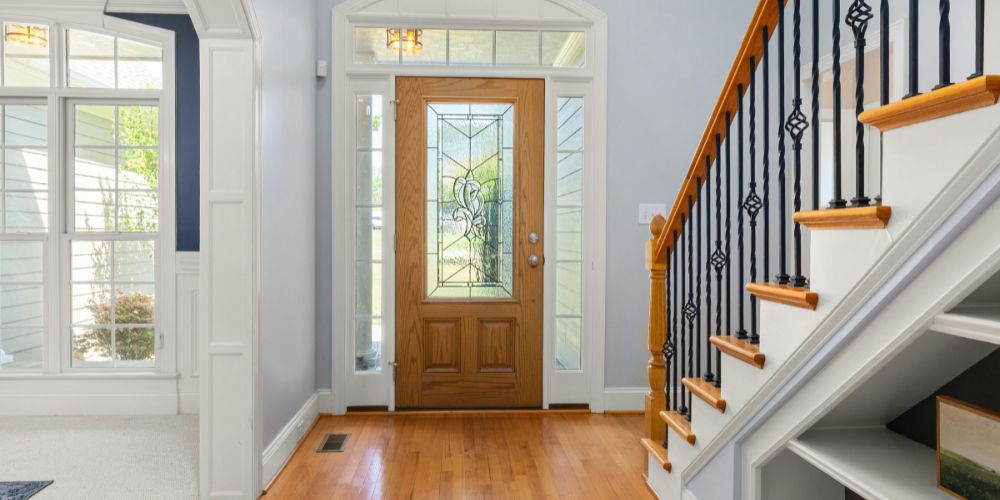
Yes, composite doors are generally better than uPVC doors because they have a stronger multi-layer construction, better insulation, and higher resistance to impact and weather conditions. A composite door usually contains a high-density foam or timber core, a reinforced frame, and a glass-reinforced plastic (GRP) outer skin. This structure makes it thicker, stronger, and more energy efficient than a standard uPVC door.
Horizon’s own guide on what a composite door is starts in the right place by showing that composite doors are built from several materials rather than a single plastic profile. That layered build is a big part of why the conversation keeps coming back to performance rather than just price.
Why Does This Comparison Matter So Much?
Both door types can look neat when they are new. That is the easy part. The harder part is working out what happens once Irish weather starts pushing at the frame, once the hallway gets cold in winter or once the front entrance is being opened and closed countless times each week.
That is where the difference starts to show. Horizon’s comparison between uPVC and composite says uPVC tends to be more budget-friendly, while composite usually comes out stronger on insulation, security, finish options and premium feel. That does not make uPVC a bad choice. It just puts each door in a different lane.
What Makes Composite Doors Feel Better?
Composite doors usually feel more solid because they are built to do more than one job at once. The outer skin is there to deal with weather.
The core is there to help with strength and insulation. That layered design is why many homeowners describe them as heavier, sturdier and more reassuring the moment they close. Horizon’s composite doors page also highlights weather resistance, low maintenance and better long-term durability as key strengths.
They also tend to win in style. Composite doors usually come with a wider range of colours, textures and woodgrain effects, which matters more than it sounds. A front door can lift the whole outside of the house when the finish looks sharper and less standard. Eurocell also notes that composite doors generally offer extra strength over uPVC while still staying low maintenance.
Where Does uPVC Still Hold its Ground?
uPVC still makes sense in plenty of homes. It is easier on the budget, simple to maintain and widely used for good reason. For a side entrance, a rental property or a house where cost has to stay firmly under control, it can still be a practical and worthwhile option. Horizon says uPVC doors give solid everyday insulation and straightforward upkeep even if they do not quite match composite for overall performance.
That matters because not every homeowner needs the most premium door on the market. Sometimes the better option is simply the one that solves the problem without stretching the project too far. A tidy well fitted uPVC door can still improve security, appearance and comfort compared with an older worn entrance door.
Which Door Tends To Last Longer?
This is often where composite starts to pull away. Safestyle says composite doors can last 30 years or more with proper care while uPVC doors are durable too though usually not to quite the same level over time. That longer life is one reason composite often feels like better value even with the higher upfront cost.
A simple way to look at it is this:
uPVC usually wins on upfront cost
Composite usually wins on strength
Composite often looks more premium from the street
uPVC still works well where practicality matters most
That is also why Horizon’s article on improving front door security fits naturally into this topic. A door is never just a panel and a handle. It is part of how secure and settled the whole entrance feels.
Conclusion
In many homes, yes. Composite doors are usually the stronger all round option when the priority is long term value, better insulation, stronger security and a more finished look. uPVC still has a place and still does its job well in the right setting though it is more often chosen because it keeps costs lower rather than because it offers more.
That is really the clearest answer. Composite is often better in performance terms. uPVC is often better for tighter budgets. For homeowners still weighing up styles, finishes and practical options across the wider range of doors, the strongest choice usually comes from deciding what matters more at the front of the house: lower spend today or stronger value over time.