



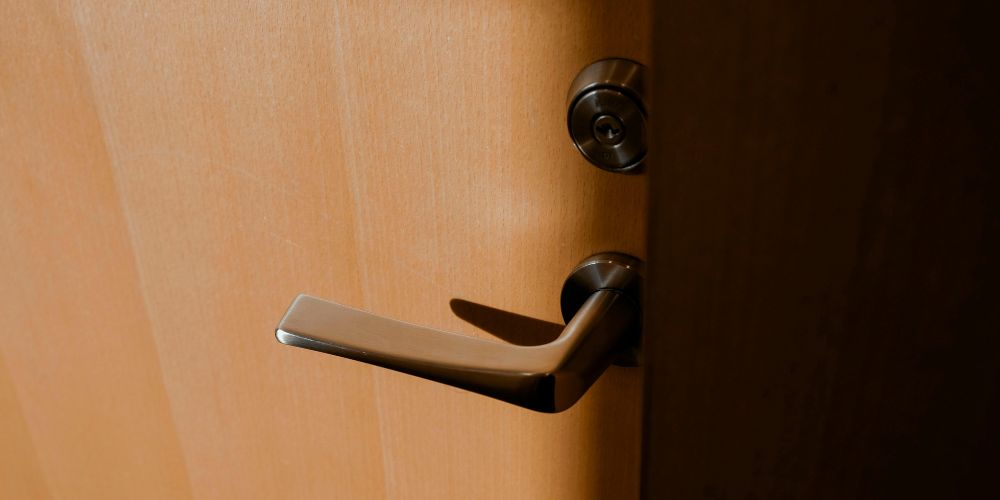
To measure a uPVC door handle, you measure the Screw Centres, the PZ Measurement (spindle to key-centre distance), the Backplate Size, the Spindle Size & Length, and (if you’re replacing both sides) the Door Thickness, then match those numbers to the replacement handle.
Step By Step Guide (Accurate, Proven Procedure)
1) Measure Screw Centres (Fixing Centres)
What it is: The distance between the centres of the two fixing screws that hold the handle to the door (top screw centre to bottom screw centre). For more information, be sure to contact Horizon Windows, and our team will assist you with the best UPVC door installation and maintenance.
How you measure it (best method):
Keep the handle on the door.
Measure from the centre of the top screw to the centre of the bottom screw using a ruler or tape.
If the screw heads hide the centres, measure edge-to-edge of the screw heads and add the screw head diameter (this gives you centre-to-centre).
Common values you’ll often see: 122 mm, 211 mm, 215 mm, 240 mm (always confirm on your door, don’t guess).
2) Measure PZ (Centres): Spindle to Key/Lock Centre
What it is: The distance from the centre of the spindle (the square bar the handle turns) to the centre of the key cylinder (or keyhole).
How you measure it:
Find the spindle position (the square hole through the handle).
Find the key cylinder centre (middle of the euro cylinder) or the keyhole centre if it’s not euro-cylinder style.
Measure centre-to-centre.
Typical uPVC multipoint lock PZ sizes:
92 mm (very common)
72 mm (common on some doors)
You may also see others like 68 mm, 70 mm, 85 mm, depending on the lock type measure to be sure.
3) Measure the Backplate Size (Length + Width)
What it is: The overall size of the handle plate that sits against the door.
How you measure it:
Measure the full height (length) of the backplate.
Measure the widest part (width) of the backplate.
If you’re only swapping the handle and you want it to cover old marks, make sure the new plate is equal to or larger than the old plate where it covered the door.
Tip: If you’re replacing like-for-like on a uPVC door, backplates vary a lot, so use your exact measurements rather than “standard.”
4) Confirm Spindle Size (Usually 8 mm Square)
What it is: The size of the square spindle bar that passes through the lock and connects both handles.
How you measure it:
If you can remove one handle, pull the spindle out.
Measure the width of one side of the square.
Most uPVC handles use: 8 mm square spindle.
(Older or unusual setups can differ, so check if yours feels loose/tight or looks non-standard.)
5) Measure Spindle Length (Important for Fit)
What it is: How long the spindle bar needs to be to pass through the door and engage both handles properly.
How you measure it (reliable method):
Remove the spindle and measure end-to-end length.
If you can’t remove it, measure door thickness and note whether your handle set is sprung or unsprung (some need a specific spindle/lock arrangement).
Practical rule: It’s safer to match the spindle length you already have, because uPVC door thickness and handle stack-up can vary.
6) Measure Door Thickness (If Replacing Both Sides or Changing Handle Type)
What it is: Thickness of the door slab.
How you measure it:
Open the door and measure straight across the edge from inside face to outside face.
Why it matters: Some handle kits and spindles are supplied for specific thickness ranges, and fixing screws may need to be longer/shorter.
What are UPVC Door Type a and B Difference?
The uPVC door Type A vs Type B difference is identified by Screw Position Check and confirmed with a Screw Centres Measurement: Type A usually has a fixing screw under/near the lever and typically 122 mm screw centres, while Type B uses fixing screws at the top and bottom ends of the backplate and commonly 211–215 mm screw centres.
Step-by-Step Guide
Step 1) Screw Position Check (Fast Visual ID)
What you do: Look at where the two fixing screws sit on the handle backplate.
Type A: One screw is commonly below the lever (not right at the end of the plate).
Type B: screws are typically at the top end and bottom end of the backplate (near the plate ends)
Why this works: “Type A / Type B” naming is widely used by suppliers to describe this fixing layout.
Step 2) Screw Centres Measurement
What you measure: The distance from the centre of the top fixing screw to the centre of the bottom fixing screw (centre-to-centre).
How Do You Measure It Accurately?
Measure on the door with the handle still fitted.
Go centre-to-centre.
If you can’t find centres, measure the edge-to-edge of the screw heads and add the screw-head diameter to convert to centre-to-centre.
Typical results you’ll see:
Type A: commonly 122 mm screw centres.
Type B: commonly 211 mm or 215 mm screw centres (varies by brand/handle series).
Important: Don’t buy off “Type” alone match your measured screw centres.
Step 3) PZ (Centres) Check (so the keyhole lines up)
What you measure: The distance from the spindle centre (square bar that turns the lock) to the key cylinder centre (or keyhole centre).
Are uPVC Door Handles a Standard Size?
PZ measurement (centres): The distance between the centre of the handle spindle hole and the centre of the keyhole or cylinder. Common uPVC door sizes are 92mm and 70mm.