



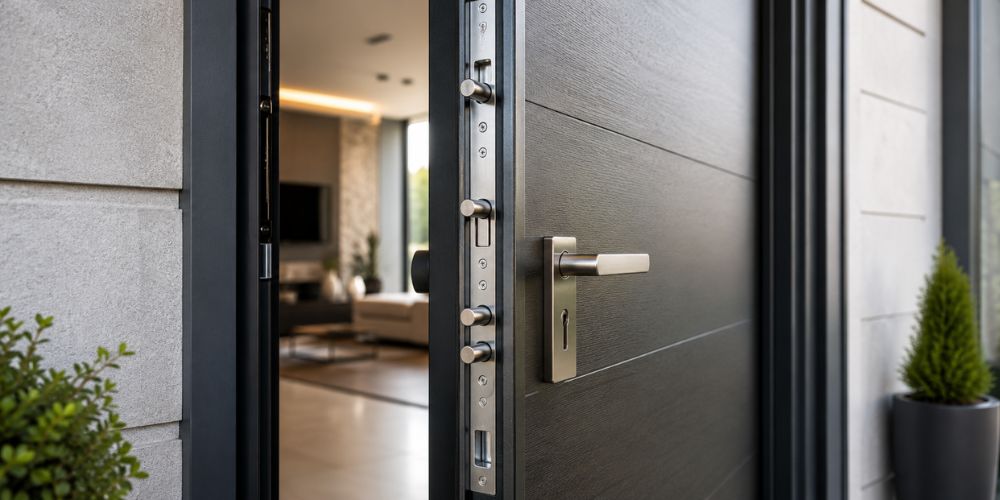
A multiple locking system is a door or window locking mechanism that secures the frame at several points instead of relying on a single lock. When the handle is turned, multiple bolts or hooks engage along the frame, creating a tighter seal and making the unit harder to force open.
What are the Benefits of a Multiple Locking System?
A multiple locking system secures a window or door at several points along the frame rather than using one central lock. This helps keep the sash or door panel firmly pressed against the seal, improving both security and performance.
The main benefits include:
Increased security: Multiple locking points make it more difficult to force the window or door open because pressure is distributed across the entire frame.
Better weather protection: A tighter seal helps reduce draughts and prevents water and air leakage during poor weather conditions.
Improved insulation: By reducing air gaps around the frame, it helps minimise heat loss and can improve the overall energy efficiency of the home.
Reduced outside noise: The stronger seal helps limit sound passing through gaps around the window or door.
Consistent operation: Even pressure across the frame helps prevent movement, reducing wear on the locking mechanism over time.
What Does The Lock Actually Do?
It locks the door in more than one place.
Instead of one latch doing all the work beside the handle, the door can catch higher up, through the middle, then lower down the frame. Some systems use hooks. Some use bolts. Some use rollers that pull the door in tighter.
From the outside, there is not much to see. A handle, a key, maybe the metal strip along the door edge. Inside that strip, the moving parts line up with keeps in the frame.
Lift the handle, the locking points move. Turn the key, they stay held.
Why Multiple Locking System Feel More Secure?
A multiple locking system feels more secure because the door is held tightly in the frame at several points instead of relying on one central lock. When the handle is lifted or the key is turned, multiple hooks, bolts, or locking points engage along the door edge, creating a stronger and more stable connection.
This gives the door a firmer closing feel, reduces movement within the frame, and provides better resistance against attempts to force the door open. The solid engagement of several locking points also gives homeowners greater confidence that the door is properly secured.
Where Are These Systems Used?
These systems are common on uPVC doors, composite doors, French doors, patio doors, glazed doors. Taller doors often benefit because the top and bottom can shift slightly as the years pass.
In Ireland, doors deal with wind, rain, damp air, cold mornings. A door that pulls tight into the frame usually feels better when the weather is rough.
Many modern uPVC doors include this type of locking as part of the build, not as a little extra added later.
What Should a Good Lock Feel Like?
A good lock should feel firm, not difficult.
The handle should lift without a fight. The key should turn cleanly. The door should close without needing a shoulder push.
A bit of resistance can be normal. Grinding is not. A stiff handle is not. A key that only turns after pulling the door hard usually means something is out of line.
Sometimes the door has dropped slightly on the hinges. Sometimes the keeps in the frame are not meeting the locking points properly. Forcing it can damage the mechanism.
Can It Help With Draughts?
Sometimes, yes.
When the locking points pull the door into the frame, the seals can sit more evenly. That may cut down small draughts, rattling, outside noise.
The lock is not doing the full insulation job. The frame matters. So do the seals, glass, fitting quality. Still, a door that locks at several points often feels more settled than one that only catches at the centre.
What Problems Show up Later?
Like any working part, these systems can wear. Dirt gets in. Hinges shift. Frames move a little. Handles loosen.
Common signs include:
- The handle feels stiff
- The key catches
- The door rubs the frame
- The top or bottom lock misses
- The door feels loose when shut
Small signs are worth checking early. A failed lock can leave the door stuck open, stuck shut or awkward to secure at night.
What Should Buyers Ask?
When buying a new door, people usually ask about colour, glass, style. Fair enough. Those things change the look of the home.
The locking system deserves a question too. Ask what type of multi-point lock is used. Ask about the cylinder. Anti-snap, anti-pick, anti-drill features can matter because the cylinder is still the part someone would target first.
Conclusion
A multiple locking system gives a door more than one secure point against the frame. It can make the door feel firmer, close better, resist movement, give homeowners more confidence.
For homeowners comparing safer door and window options, Horizon Windows shares more detail through its window and door security guidance. It is worth knowing what is inside the door before choosing what goes on the outside.