



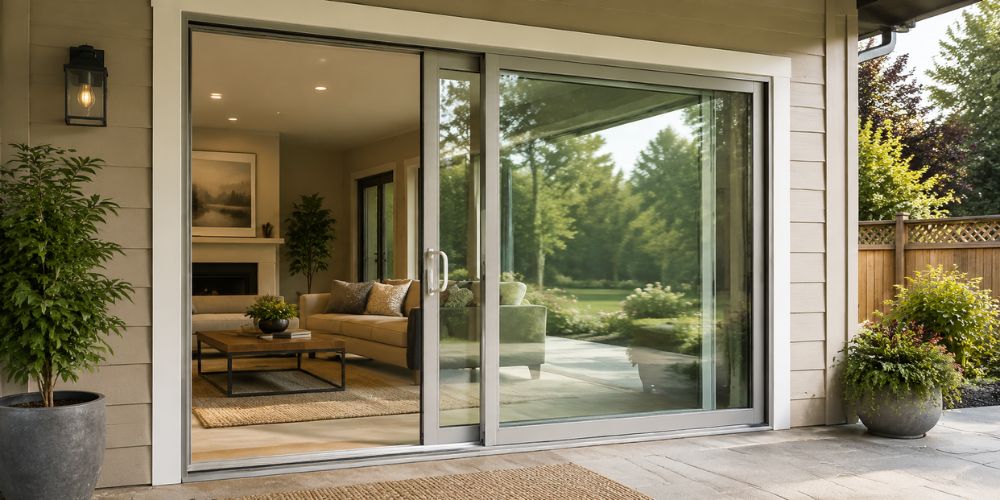
Installing a sliding patio door starts by removing the existing opening materials, checking that the doorway is level and square, and preparing a stable base for the new frame. The door frame is then positioned, shimmed, and fixed into the opening before the sliding glass panels are fitted onto the rollers and adjusted for smooth movement. The final steps involve aligning the locking mechanism, adjusting the rollers for correct panel height, and sealing the frame edges with flashing and exterior-grade sealant to prevent water and air infiltration.
Step by Step Method for Installing Patio Door
Check the Opening Before Work Starts
Accurate measurement comes first. The opening should be checked at three points for width. Height should be measured on both sides plus the centre. The installer should check whether the sill is level and whether the opening is square.
The door style matters too. Sliding, French and folding systems do not use the same frame layout. A quick look at common patio door styles can prevent the wrong unit being ordered.
Useful items usually include:
- A long spirit level
- A tape measure
- Suitable frame fixings
- Packers or shims
- Flashing tape
- Compatible sealant
- Low-expansion foam
The glazed panels are heavy. Safe lifting needs at least two capable people.
Remove the Old Door Without Rushing
The sliding panel normally comes out first. It is lifted into the upper track then brought inward from the bottom. Fixed panels, stops and frame screws can then be removed.
The old frame should be cut out carefully rather than forced from the wall. Rough removal can damage plaster, brickwork or the damp-proof detail beneath the threshold.
Once the opening is clear, old sealant, loose mortar and rotten timber need to go. Hidden damp must be dealt with before the new frame covers it.
Prepare the Sill Against Water
Water management is the part most likely to be underestimated. The sill area should be clean, firm and level. A sill tray or correctly lapped flashing helps direct any moisture back outside.
Sealant is then applied in the position stated by the manufacturer. Drainage holes must stay open. Filling every gap with sealant may look thorough, but blocking the drainage path creates another problem.
A changed or widened opening may need structural advice. The lintel must support the wall above without relying on the new door frame.
Set the Frame Square
The frame is placed into the opening and held with packers. The sill is checked first. The side jambs are then checked for plumb, followed by the head.
Fixings should pass through the points stated in the installation guide. Packers belong behind those points so the frame does not bend as screws are tightened.
Diagonal measurements help confirm that the frame is square. The screws should be tightened gradually while the level is checked again. A frame can look straight at first then twist under uneven pressure.
Fit the Glass Panels and Screen
The fixed glazed panel is secured before the moving panel is placed on its rollers. The moving panel should slide freely without lifting, rubbing or drifting by itself. Roller screws can be adjusted until the meeting rails line up and the lock engages cleanly.
Anyone learning how to install a sliding patio screen door should leave the screen until the glazed panels are working properly. The screen panel usually lifts into the top outer track then drops onto the lower guide. Its rollers are adjusted so it moves smoothly without jumping the track.
Handles, stops and anti-lift devices are fitted last.
Seal and Test the Finished Door
The gap around the frame can be insulated with low-expansion foam or the system specified by the manufacturer. Too much foam may bow the jambs.
Exterior joints need a neat weather seal. Inside, trims should only be fitted after the door has been tested several times. The lock, rollers, drainage slots and threshold all need a final check.
Tracks should be vacuumed rather than packed with grease. The practical advice in this door care guide also helps protect seals, frames and hardware after fitting.
Conclusion
A sliding patio door depends on careful preparation more than speed. The opening must be square, the sill must shed water and the frame must stay true while it is fixed.
Large glazed units or altered openings are usually better left to trained fitters. Professionally fitted patio doors are less likely to suffer from stiff movement, poor sealing or early water damage.