



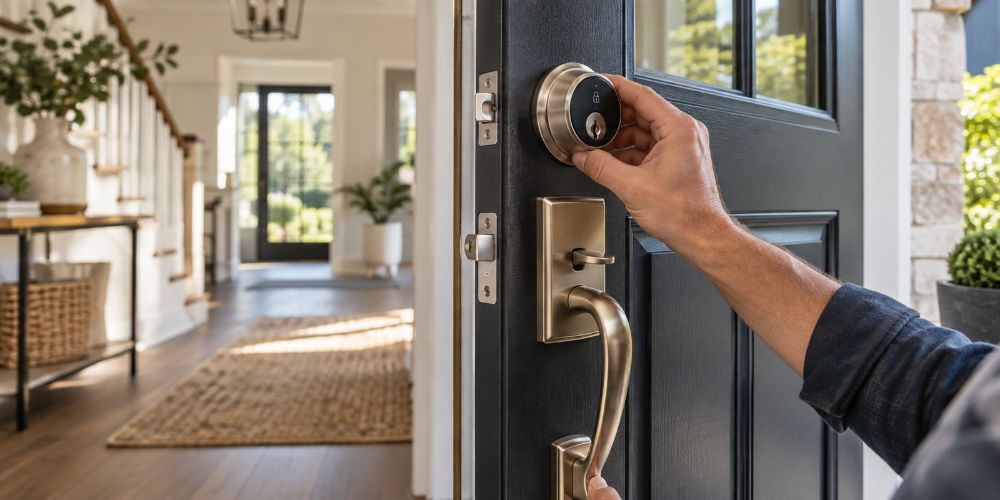
A front door lock is easy to overlook until the key starts catching or the handle suddenly needs more effort. Security problems often begin with small signs like these. A lock can still turn while the door itself has already dropped slightly out of line.
For homes with modern uPVC or composite entrances, Horizon Windows shows how much the door, frame and hardware work as one unit. That matters when deciding how to pick a front door lock. The right choice has to suit the door first. Brand names and shiny hardware come later.
Start With the Door Type
A timber front door does not use the same hardware as every uPVC or composite door. Traditional timber doors may use mortice locks or night latches. Modern uPVC and composite doors commonly use a multipoint locking strip controlled by a cylinder.
That difference changes what actually needs replacing.
If a multipoint door still locks smoothly but the key cylinder is old, the cylinder may be the only part that needs attention. If the handle is stiff or the locking points do not meet the frame cleanly, a new cylinder will not correct poor alignment.
Check the Existing Lock First
A quick inspection can prevent the wrong purchase. The key should turn without grinding. The handle should move without excessive force. The door should close without needing a shoulder push.
A lock that becomes easier when the door is open often points to alignment rather than an internal lock fault. Hinges can settle over time. Weather can also affect how a door sits in its frame.
Horizon has a practical guide on changing a lock on a composite door that explains why the cylinder, mechanism and door position need to be considered together.
Look Beyond a Basic Cylinder
The cylinder is the part that accepts the key. On many modern front doors, it sits inside a larger multipoint system.
A basic cylinder may physically fit but still offer poor resistance to common forms of attack. Higher security cylinders are designed to resist techniques such as snapping, drilling, picking and bumping.
For Euro profile cylinders, recognised security markings provide a better reference than packaging claims. TS 007 three-star cylinders are one established option. Another arrangement can combine a one-star cylinder with two-star security hardware.
The lock should also sit neatly within the handle rather than projecting far beyond it. An exposed cylinder can become an unnecessary weak point.
Consider the Whole Locking System
A strong cylinder cannot compensate for a weak frame or badly fitted door.
Multipoint systems secure the door at several positions along the frame. Depending on the mechanism, those points may include hooks, bolts, rollers or a central latch. When everything lines up correctly, force is spread across more than one area.
The Window & Door Security range from Horizon reflects this wider approach. The lock cylinder is only one part of a secure entrance.
Anyone comparing locking layouts can also read the company’s front door security tips, which cover the surrounding frame, hinges and other vulnerable areas.
Check Security Standards
Security labels are useful because terms such as heavy duty or high security can otherwise mean very little.
An Garda Síochána advises householders to consider external doors that have been tested to recognised security standards. PAS 24 is used for testing complete doorsets rather than one isolated lock. The current PAS 24 framework assesses how the assembled door, frame and hardware resist attack.
For replacement cylinders, TS 007 and Sold Secure SS312 Diamond are useful standards to recognise. A locksmith can confirm whether a particular lock suits the existing door and hardware.
In Ireland, anyone hiring a locksmith should also check that the locksmith is licensed by the Private Security Authority.
Think About Daily Use
Security is not the only practical concern. A front door is used several times a day, sometimes by children, older family members or people carrying shopping.
A key should enter cleanly. The handle should not need force. Internal escape also needs thought. Some households prefer a thumbturn on the inside because it allows keyless exit from the secure side.
That choice still has to suit the property. Glass near the lock, letterbox position and other access points can affect what hardware makes sense.
Key control matters too. When keys have been lost or an older property has changed occupants, replacing the cylinder can remove uncertainty about who still has a working copy.
Avoid Buying on Price Alone
A cheap replacement can be tempting when the old cylinder looks small and simple. The fitting may take only a short time, yet the part controls access to the whole house.
The correct size matters. So does certification. A poorly sized cylinder may sit too far outside the handle or fail to operate smoothly.
Compatibility deserves the same attention. The cylinder, handle, multipoint strip and frame keeps need to work together without strain.
Conclusion
A suitable front door lock starts with the door itself. The material, existing mechanism, cylinder size, frame condition and security rating all deserve a look before a replacement is chosen.
For a worn entrance where the lock is only one of several problems, replacing the complete doorset may be more sensible than upgrading one small component. Horizon’s Front Doors Dublin range combines the door, frame and locking system as one fitted entrance rather than treating security as a separate add-on.