



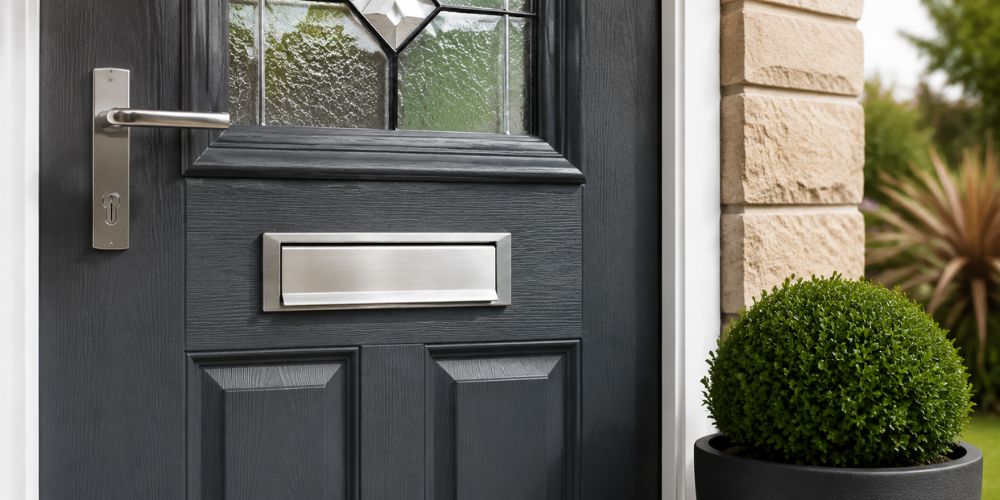
A letterbox looks like a small detail until it has to be cut into a front door. On a composite door, that opening passes through a layered panel built for strength, insulation and weather resistance. The answer is still yes, but the way the letterbox is specified and fitted matters.
For homeowners comparing entrance options, Horizon Windows shows how much choice now sits around door style, glazing and hardware. A letterbox belongs in that planning stage rather than being treated as an afterthought.
Things to Consider Before Adding a Letterbox to Your Door
Before adding a letterbox, it is important to consider the type of door you have, how secure the design is, and whether it will affect insulation or weather protection.
Security: Choose a letterbox with a secure flap and anti-theft features to reduce the risk of someone reaching through the opening or accessing your home.
Weather Protection: A good-quality letterbox should have proper seals and flaps to help prevent rain, draughts and cold air from entering.
Door Type: Not every door can be modified in the same way. Timber doors are easier to adjust, while uPVC and composite doors need careful fitting to avoid affecting their strength or warranty.
Size and Placement: Make sure the opening is large enough for your regular post and positioned at a comfortable height for both the homeowner and post delivery.
Privacy: Look for a design that limits visibility through the door and keeps the inside of your home protected from outside view.
Can a Composite Door Take a Letterbox?
Yes, a compatible letterbox can be fitted to many composite doors.
The better question is when it should be fitted. A new door can usually be ordered with the letterbox position already allowed for. That gives the manufacturer or installer control over the cut out, the hardware and the sealing around it.
Composite doors are not hollow plastic panels. Their construction may include a solid or insulated core, a tough outer skin and reinforced areas around the locking side. Horizon’s guide to composite door construction gives useful background on why cutting the slab needs more care than cutting an ordinary timber panel.
Why Is Factory Fitting Usually Better?
A letterbox fitted during manufacture is easier to place without interfering with the lock, glazing or internal reinforcement. The opening can also be sized for the exact letterplate being used.
That matters because an oversized cut out leaves less material around the hardware. A poor fit can also create a route for draughts or rain.
Retrofitting is not automatically wrong. It simply needs more checking. If an existing door is still under warranty, drilling or cutting the slab may affect that cover. The manufacturer’s instructions should be checked before any work starts.
The same caution applies to the whole door installation. Horizon’s fitting guide explains why alignment, sealing and accurate fitting affect how a composite door performs once installed.
Can a Letterbox Affect Door Security?
Yes, It can if the position or hardware is poorly chosen.
The letterbox should not make it easy to reach keys, handles or locking controls from outside. House and car keys should stay well away from the opening. A letterbox can become a weak spot when valuable keys are routinely left within easy reach inside the hall.
A few practical checks help:
- Keep house and car keys well away from the entrance.
- Choose a letterplate that closes firmly on both sides.
- Avoid a position that sits too close to the internal handle.
- Ask whether a compatible internal security cowl is suitable.
Security also depends on the door as a complete unit. A strong slab cannot compensate for weak hardware or poor fitting. When the entrance itself needs replacing, the wider front door range shows how door material, locking and hardware choices need to work together.
Will a Letterbox Make the Door Draughty?
Yes, a letterbox will make the door draughty because it lets air pass through and make your door draughty.
The opening interrupts an otherwise solid door panel. If the letterplate does not close properly or the cut out is poorly sealed, cold air can move through it. Wind driven rain can also become a nuisance on exposed entrances.
Good letterplates use internal and external flaps with brushes or seals to overcome air movement. The exact performance depends on the product and how neatly it is fitted.
This is easy to overlook because the door itself may be highly insulated. A small gap around loose hardware can still be noticeable on a windy Irish evening. It may show up as a cold spot near the hall rather than an obvious draught across the whole room.
Hardware needs basic care too. The flap should close cleanly and any loose fixings should be dealt with before movement creates a larger gap.
Can a Letterbox Be Added to an Existing Door?
Yes, a letterbox can be added to an existing door by cutting a slot, but modifying a uPVC or composite door may affect the manufacturer’s warranty.
The installer needs to know what sits inside the slab and whether the proposed position interferes with reinforcement, glazing or locking components. The existing warranty also matters. Cutting first and asking later can turn a simple hardware change into an expensive door problem.
The original door manufacturer is the safest source for compatible letterplate sizes and permitted positions. If those details are unavailable, a professional assessment is more sensible than copying measurements from another door.
An external wall-mounted post box is another option when cutting the slab would be unsuitable. It keeps the door intact and can make sense where security or warranty concerns outweigh the convenience of an integrated letterbox.
What Should Be Checked Before Ordering?
The letterbox needs to work with the door rather than simply match the handle.
Position, finish and size all matter. So do the internal flap and any security features. A low letterbox can also be awkward for everyday use, while a poorly placed one may interfere visually with mouldings or glazing.
Before the order is confirmed, the door supplier should know that a letterbox is required. That allows the panel design and hardware to be checked together. The choice is much easier at that stage than after a finished door has already been installed. That small decision is easier before manufacturing begins.
Conclusion
A composite door can have a letterbox without losing the qualities that made the door attractive in the first place, provided the opening is planned and fitted properly. Factory preparation is usually the cleaner option. For new entrances, the available composite doors can be considered with the letterbox, glazing and other hardware decided before installation.