


Windows may affect home comfort despite their appearance. Older glass may make rooms cooler, heating less effective, making the home seem different.
The glass type installed typically causes problems. Single-layer windows in older homes give minimal protection from external temperatures. This surface transfers heat more easily, making interior temperature control tougher.
Modern windows have better insulation due to glazing advancements. Insulated glass units are common. Homeowners looking into window renovations typically investigate alternatives from Horizon Windows to discover how glazing selections might effect comfort and energy efficiency.
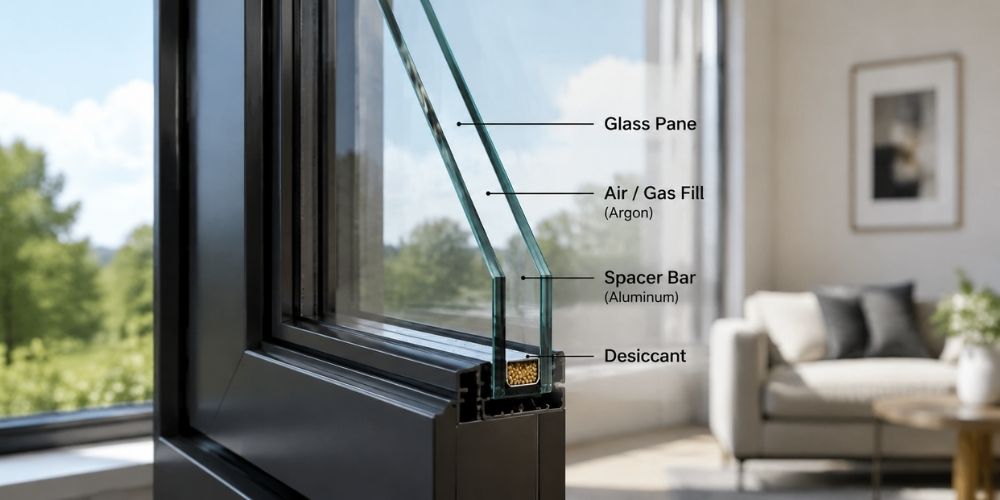
For anybody looking at what is igu glass, it refers to a sealed unit formed with two or more glass panes separated by an insulated area. This gap is filled with air or argon to slow heat transfer through the window.
More resistance between the home and outdoors makes the window perform better than single glazing.
How IGU Glass Is Made
An IGU is produced as a complete sealed unit before it becomes part of a window. The glass panes, spacer and sealing materials work together to create the insulated section.
The main parts include:
- Multiple glass panes
- Spacer material between the panes
- Sealed edges
- Air or gas-filled cavity
The spacer keeps the glass layers at a consistent distance from one another. This additional space is what distinguishes an IGU from a regular window pane.
Inadequate sealing of the area between the panes allows moisture to enter and affects the unit’s operation. This is why the sealing quality of the glass is so important.
Different IGUs can be made with different specifications. Some contain two panes, while others use three. Some include special coatings that influence how heat and sunlight pass through the glass.
Why IGU Glass Reduces Heat Transfer
A single piece of glass creates only a limited barrier between a home and the outside environment. The glass layers remain consistently spaced apart thanks to the spacer. The extra room is what makes an IGU different from a standard window.
Moisture enters the panes due to poor sealing, affecting performance. This emphasizes glass’s sealing.The difference is often noticed in rooms with larger windows. A space with older glazing may feel colder near the window compared with other parts of the room.
The performance of an IGU depends on several factors:
- Number of glass panes
- Gas used inside the cavity
- Glass coatings
- Spacer design
- Installation quality
The glass unit is only one part of the window. The frame and fitting around it also affect how effectively the complete system performs.
A well-insulated glass unit may still lose performance if gaps around the frame allow unwanted air movement.
IGU Glass And Everyday Comfort
Many homeowners consider changing their windows because of how their home feels rather than because of technical measurements.
A bedroom may become difficult to keep warm. A living room with large windows may feel uncomfortable when outdoor temperatures change. These situations often lead homeowners to consider better glazing.
IGUs reduce the speed at which heat moves through the window. Some insulated glass units also include Low-E coatings, which help manage heat transfer while allowing natural light into the property.
However, glazing is not the only factor affecting comfort. Insulation throughout the home, heating systems, window frames and installation quality all contribute.
A window upgrade works best when the complete system is considered.
Double And Triple Glazing Options
IGUs are used in different window designs, with double and triple glazing being common options.
Double glazing uses two glass panes with one insulated cavity between them. It is widely installed because it offers better insulation than older single glazing.
Triple glazing adds another glass pane and an additional cavity. This extra layer can provide stronger insulation for properties where reducing heat loss is a priority.
The choice depends on the property. A newer home with good insulation may have different needs compared with an older building where heat loss is more noticeable.
More glass layers are not the only factor to consider. The frame, installation and overall window design also influence the final result.
Homeowners comparing higher-performance glazing can explore Triple Glazing to understand how additional glass layers affect window insulation.
Signs An IGU May Need Repair
IGUs are designed for long-term use, but problems can develop if the sealed unit fails.
The most common sign is condensation appearing between the glass panes. This usually means the seal has failed and moisture has entered the cavity.
This is different from normal condensation on the surface of a window. Moisture trapped inside the sealed unit usually indicates an issue with the IGU itself.
Other signs may include:
- Foggy areas between panes
- Reduced insulation performance
- Moisture inside the unit
- Changes in how the window feels
In some cases, only the glass unit needs replacement rather than the entire window. The condition of the frame will determine which option is suitable.
Conclusion
Understanding what is igu glass helps homeowners make better decisions when comparing window options. IGUs use multiple glass layers and sealed spaces to reduce heat transfer compared with traditional glazing.
The final result depends on the complete window system, including the glass, frame and installation quality. Homeowners interested in improving insulation can explore Triple Glazing for further information.