


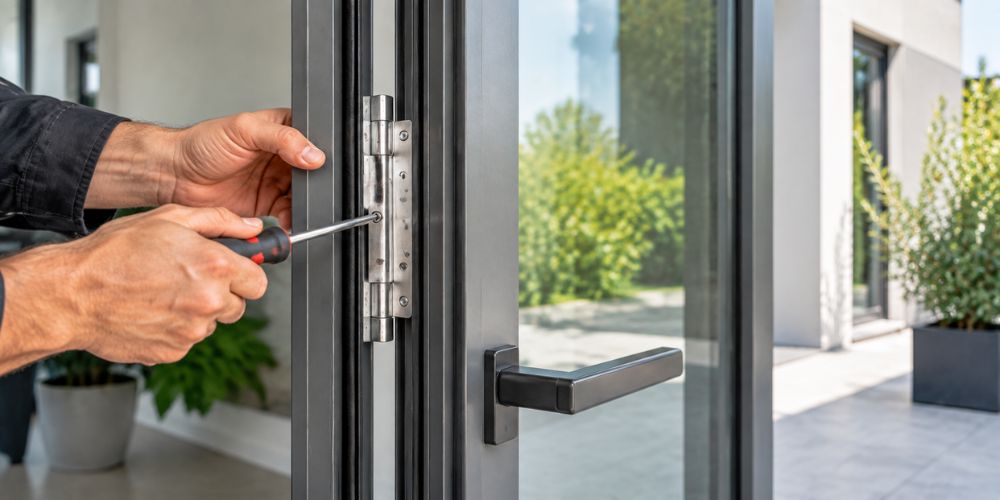
There’s a particular kind of frustration in a front door that needs a shoulder to close properly. Same goes for a patio door that’s started catching on the track every single time. It doesn’t happen overnight. First it’s a faint scrape near the threshold. Then the handle needs an extra shove before the key turns.
Aluminium doors are built to outlast most of the house around them, but the hinges, rollers and locking points inside still drift out of true over time. Horizon Windows fits and services aluminium doors across Dublin. Most of the small stuff can be sorted at home in well under an hour.
Signs Something’s Off
A door gives warning before it properly stops working. The bottom edge starts catching the threshold or dragging across the floor. The handle needs lifting or shoving before the key will turn at all. Cold air finds its way in around the edges even with the door pulled fully shut. On a front door running a multi-point lock, the handle lifting only halfway before it jams usually means the hooks are catching on a misaligned keep, not a broken lock.
Tools Worth Having to Hand
A short list covers most of what’s needed.
- A set of metric Allen keys, 4mm and 5mm cover most aluminium hinges
- A Phillips and a flathead screwdriver
- A spirit level, for checking the door edge against the frame
- Silicone spray, for tracks, rollers and the locking gear
Skip the WD-40 on the lock itself. It attracts grit over time rather than solving anything. A torch helps too, for spotting early wear inside the hinge barrel before it turns into a bigger, costlier job.
Adjusting the Hinges
Finding the Adjustment Points
Open the door fully to get at the hinge barrels. Most aluminium doors built in the last decade or so have three separate adjustment screws. One sets height, usually at the base of the hinge. Another sets horizontal position, often tucked under a small cover cap. The third handles compression, how firmly the door presses into the seal once it’s shut. Now, be cautious because at any point if you get it wrong and the door either lets the cold in or fights being shut.
Fixing a Door That Drags
Small moves here, always. A quarter turn on the height screw, then close the door to see what changed before touching anything else. Dragging worse on one side usually means the horizontal screw needs a touch too. But if it drags evenly along the whole bottom edge, rather than favouring one corner, that’s the frame sitting low, not the hinge.
Fixing a Door That Won’t Close
A door needing a lift before the key turns almost always has a locking point out of line with its keep, not a fault in the lock itself. Adjusting the compression screw or shifting the keep by a few millimetres usually sorts it without going anywhere near the lock mechanism itself.
Testing as You Go
Close and open the door fully after every single turn of the screw, rather than making a run of adjustments and checking at the end. It’s slower, but it makes it obvious which screw caused which change. It also stops a small nudge turning into an overcorrected mess.
Sliding and Bi-Fold Doors
Aluminium bi-fold doors and sliding patio doors work off bottom rollers rather than hinges alone, so the adjustment sits in a different spot. Most rollers have a small screw at the base of the panel that raises or lowers it inside the track. Cleaning the track out is usually the first move to try, since dirt and built-up grit cause more sticking than actual misalignment ever does. On wider lift and slide doors, the rollers need the odd bit of lubrication as well as adjustment. Dry rollers wear a track down faster than years of normal use.
Why Doors Move Out of True in the First Place
Heavy glass panels put constant strain on hinges and rollers, so a small amount of drift over the years is normal rather than a fault. Aluminium expands and contracts with the seasons too, enough on its own to throw a tight seal slightly out of true by the time a Dublin winter rolls round. New builds settle a little in their first year or two as well, which shifts a frame that was dead square on the day it went in.
When It’s a Job for Someone Else
Minor sagging and sticking are safe enough to sort at home, but a few signs point somewhere more serious. A locking system that won’t engage anywhere, even once the keeps are realigned properly, usually points to a worn gearbox rather than anything an Allen key will fix. Doors carrying PAS 24 security certification should only be touched by a qualified installer, since the wrong adjustment to a locking point can quietly affect the rating without looking any different to the eye.
Conclusion
Most of this takes under an hour with the right tools and a bit of patience. For anything past a small tweak, especially where the warranty still stands, Horizon Windows services and adjusts aluminium doors across Dublin without putting existing cover at risk. A quick call first usually settles whether it’s a job worth doing solo or one better left to somebody who does it every day.