


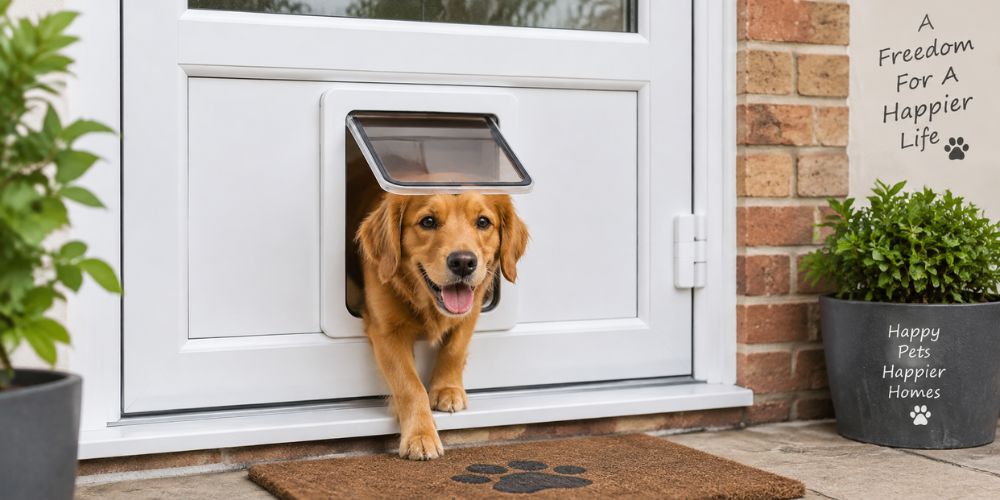
A dog flap can be fitted to many uPVC doors, but the door panel decides how straightforward the job will be. A solid lower panel is usually the easiest starting point. A door with glass, internal reinforcement or a complicated locking layout needs more care because cutting in the wrong place can damage the panel or interfere with the lock.
For households asking can you put a dog flap in a upvc door, the answer is generally yes, provided the door construction suits the chosen flap. The different door styles shown by Horizon Windows also make one point clear: two uPVC doors can look similar while being built quite differently.
Which uPVC Doors Can Take a Dog Flap?
A solid, flat uPVC panel can often accept a dog flap. The installer marks the opening using the flap manufacturer’s template, checks the area behind the panel then cuts only where there is enough clear space.
Doors with moulded shapes, raised sections or narrow lower panels can be more awkward. The flap needs a flat mounting surface so both halves sit evenly. A badly seated frame can leave gaps around the edges, allow rain in or make the flap bind.
The same check applies to front doors. Some front doors contain reinforcement or more complex security hardware. A suitable position should avoid lock rods, keeps and structural sections before any hole is made.
Check the Door Before Any Cutting
The door should be identified before tools come out. An installer will normally check whether the lower section is a removable uPVC panel, a reinforced panel or glass. The thickness also matters because every dog flap has a permitted fitting depth.
The door’s condition deserves attention too. A sagging sash, stiff handle or poor seal should be corrected first. Horizon Windows’ guide to door caring and maintenance covers the basic checks that help reveal worn seals, loose hardware and alignment problems before the panel is altered.
Warranty terms are another sensible check. Cutting an existing door may affect manufacturer cover, especially where reinforcement or a specialist panel is involved. A replacement panel can sometimes be the cleaner option because the original panel can be stored and refitted later.
How a Dog Flap Is Normally Fitted
For a suitable solid panel, fitting starts with the dog’s size and the flap dimensions. The opening should allow comfortable movement without forcing the animal to crouch sharply or step over an unnecessarily high threshold. A flap that sits too low can make a larger dog crouch awkwardly every time.
The flap template is then positioned square on the door. Pilot holes are drilled at the marked corners. A jigsaw can be used to form the opening on an appropriate panel. The cut edges need to remain neat so the inner and outer flap frames sit flush.
After fitting, the door should close normally and the multipoint lock should operate without extra force. If the door already sits low or catches the frame, the Horizon guide on adjusting uPVC door hinges gives useful background on alignment before extra work is added to the panel.
What About Double Glazed Door Panels?
A sealed double glazed unit needs a different approach. Existing toughened or sealed glass should not simply be cut after manufacture. The normal solution is a new glass unit made with the required opening already prepared for the pet flap. A glazier then installs the new unit and the correct mounting adaptor.
This route costs more than cutting a basic uPVC panel, but it protects the sealed glazing system. It also avoids breaking the sealed unit or destroying the airtight cavity between the panes. Specialist pet flap manufacturers also direct glass installations toward a precut replacement pane.
Security, Draughts and Daily Use
A dog flap creates an opening in an external door, so size and position deserve thought. A very large flap placed near a handle or lock can create an unnecessary security concern. The opening should stay clear of the locking mechanism while the flap itself should close firmly after use.
Weather sealing matters in Ireland as well. A poorly fitted frame can admit draughts or water around the cut edge. Good installation leaves the pet door square, stable and properly sealed without distorting the main door panel.
Microchip flaps add another detail. Some uPVC doors contain metal reinforcement. Metal close to certain electronic pet doors can reduce the reader’s range, so the flap manufacturer’s installation instructions should be checked before the opening is cut.
When Professional Fitting Makes Sense
DIY fitting may be reasonable on a simple removable panel when the construction is known and the installer is confident with drilling and cutting. The risk rises quickly when the door contains glass, reinforcement or a multipoint locking system.
Professional fitting is usually the safer choice for glazed panels, expensive doors or any door where the internal structure is uncertain. A fitter can also advise whether replacing the lower panel is more practical than modifying the existing one. That decision can preserve the original panel and make a future reversal easier.
Conclusion
A dog flap can usually be added to a uPVC door when the panel, lock layout and flap size are suitable. Solid panels are generally simpler. Glazed sections normally require a purpose made replacement unit.
Before modifying an existing entrance, the construction should be confirmed and the effect on security, sealing and warranty should be considered. The uPVC doors available from Horizon Windows also provide a useful reference for the different door styles and panel layouts found in modern homes.